

What Is Audio Metadata?
If you are familiar with metadata, you can skip this part, as it is essentially the same for audio files. Metadata is designed to add additional information to a file. For audio, this information can include the title, artist, album, track number, genre, cover art, and more. Having this metadata is useful because it aids in organizing your files effectively.
Why Do You Need It?
As mentioned previously, having metadata greatly assists in organizing all your files. How does it work? Most modern local music players can read the data in your audio files and sort them by album, complete with album covers.
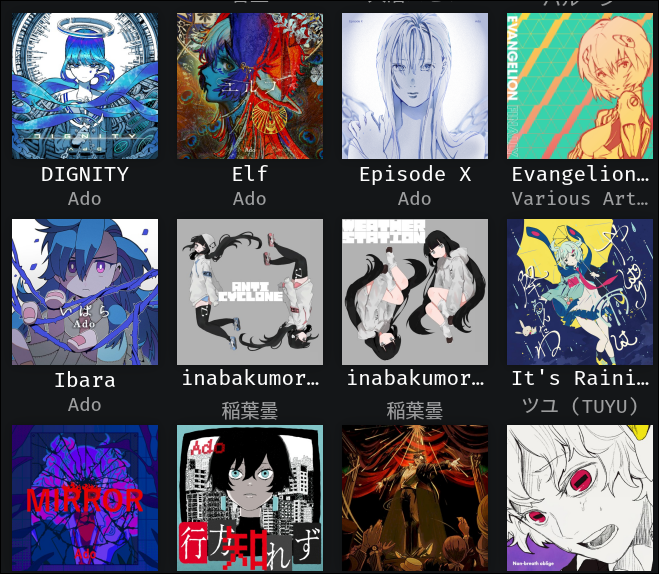
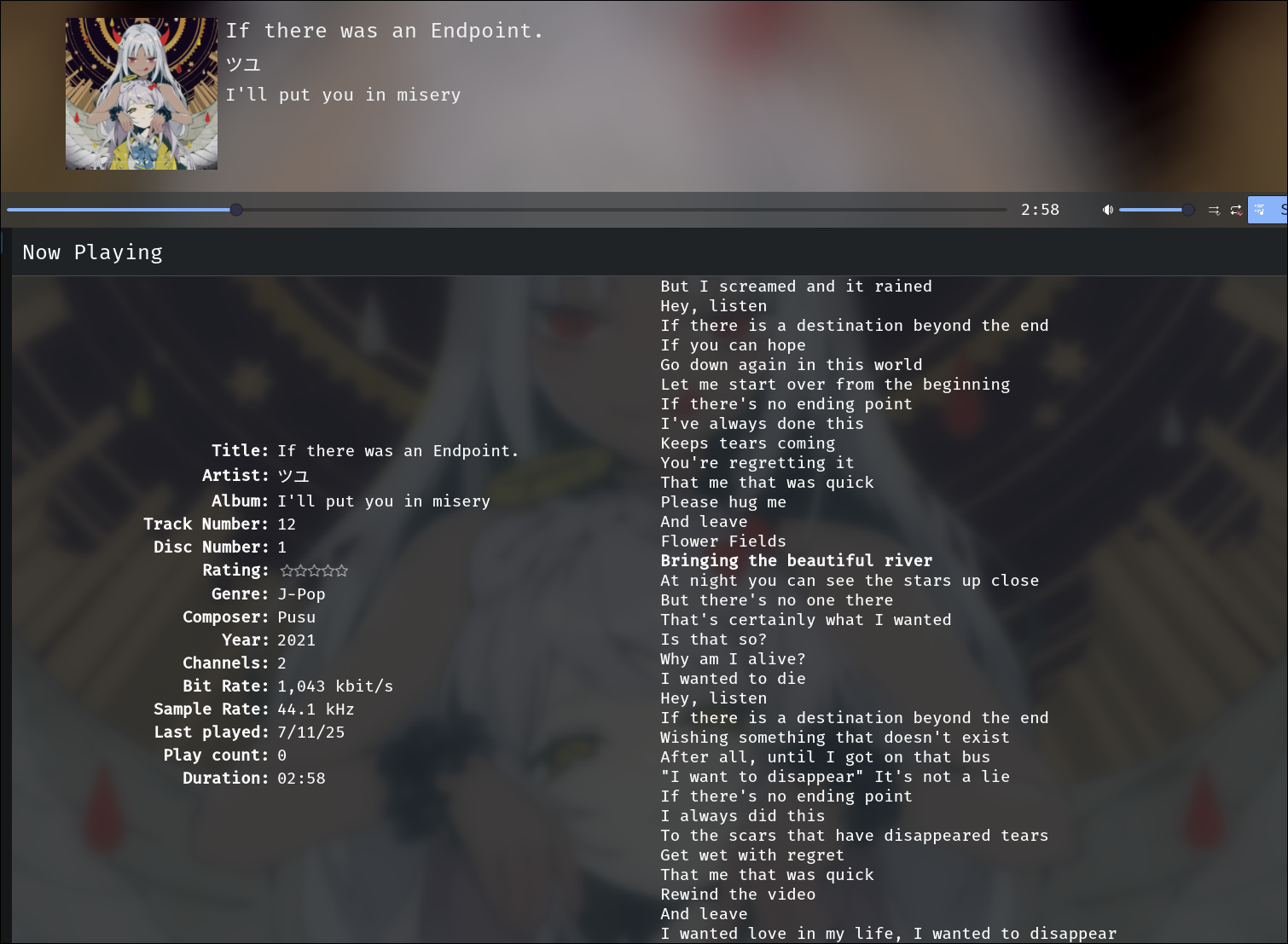
This image shows an example from Elisa. With audio metadata, you can achieve an experience that is as good as, or even better than, streaming services on your phone, desktop, or local server. You can also embed synced lyrics into an audio file as metadata, as shown in the following image:
How Can You Get Music Metadata?
It is quite simple. If you download music from my app, you probably do not need to do anything other than enjoy the music. However, it isn’t all sunshine and rainbows. My app isn’t perfect; in fact, I would say it is quite buggy. Therefore, I will show you some other ways to obtain music metadata.
The first source for metadata that comes to mind when people ask me is always the MusicBrainz database.
MusicBrainz is a MetaBrainz project that aims to create a collaborative music database that is similar to the freedb project. MusicBrainz was founded in response to the restrictions placed on the Compact Disc Database (CDDB), a database for software applications to look up audio CD information on the Internet. MusicBrainz has expanded its goals beyond serving as a CD metadata repository, evolving into a structured online database for music information, including details about artists, performers, and songwriters.
There are many ways to use their database: the official app, manual entry with Kid3, use python with Beets, and more. I will not teach you how to use any of these, as they have their own documentation available.
Unfortunately, MusicBrainz isn’t perfect, it does not provide any lyrics. Consequently, we need a separate database for lyrics. In my opinion, the best FOSS database is lrclib. If you want to use it, there is an official app called lrcget. It is super easy to use and contribute to. You can also use the CLI script I created for lrclib.
That concludes my guide. I hope you enjoy this journey!
Leave a comment